Hi, everyone:

I'm afraid I have bad news.  Due to some important personal matters that need my undivided attention, I have to put the blog on hiatus.  I don't know exactly how long I will be away.

During the hiatus, I will finish the new post (it's almost done) and publish it.  But after that piece, I won't be writing for probably a few months.

I apologize for any inconvenience.


Bev


[...]

Continue


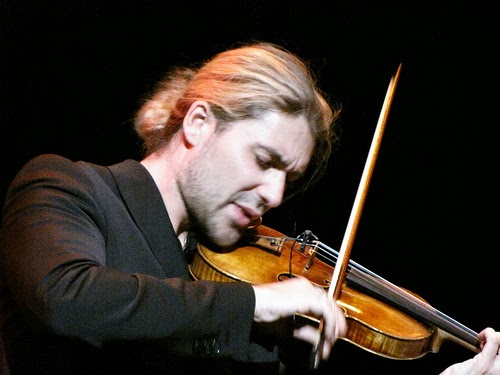
About four years ago, I was flipping through the TV channels when I came across a handsome, solo violinist in concert.  He was dressed in faded blue jeans, a T-shirt, and a blue jacket.  He had a bit of stubble, and his blond hair was tied back in a short ponytail.

Not only did his casual appearance stop me in my tracks, his music also had my undivided attention.  It wasn't entirely classical, and he was backed by his band and an orchestra.  As I continued to listen, I realized that David Garrett was a crossover classical artist, and what I was listening to had to be a fusion of classical elements with rock or pop.  Garrett was performing a track from one of his albums, David Garrett, and the music was an amazing blend of two popular and well respected genres.

If that weren't enough, I was even more transfixed by Garrett's outstanding command of his instrument and his physical ability to play at stunning speed. The speed and precision in which he played some of his pieces were phenomenal.  (He is in the Guinness World Records for playing "Flight of the Bumblebee" in 66 seconds.  Now that's lightning speed!)

I was so in awe of Garrett's incredible talents that the next day I ran, not walked, to the nearest music store and bought the CD.  I became a big fan after listening to it several times.

The Crossover Music

On his CD, David Garrett, the crossover violinist did his own arrangements and integrated classical elements into songs by popular recording artists and rock bands.  For example, Garrett fused Mozart's "Turkish March" with a Michael Jackson song.  And on another piece, Garrett fused Paganini's "Caprice No. 24" with a Metallica song.

Garrett also did his own interpretations of the theme song from the movie "Pirates of the Caribbean," and from Vivaldi's "Summer" and Bach's "Air."  In addition, he included a track of his own composition.

Who is This Virtuoso Extraordinaire?
So, who is this guy and how long has he been around?  The short answer is he's a world-class, accomplished violinist who has been around for a long time.  

David Garrett is from Germany and has been playing the violin since age four. During his childhood, he studies under world-renowned violinist Yehudi Menuhin. At age ten, he makes his first appearance with the Hamburg Philharmonic.  At age thirteen, he is the first youngest soloist to sign a contract with Deutsche Grammophon Gesellschaft, a German classical record label.  

Garrett's rapid rise to fame and popularity in such a short period of time is truly remarkable, and his repertoire is equally as impressive.  He becomes a superstar in Germany and throughout Europe.

In 1999, Garrett leaves Germany and moves to New York to study with legendary violinist Itzhak Perlman at the Juilliard School.  He wants to perfect his technique and study composition.  It is also at this time when he is in contact with people his age, and he becomes aware of the types of music that appeal to them.  One of the popular genres is rock music that would later become a major influence in his work.

After Juilliard, Garrett returns to Germany and decides to branch out and reach a younger audience.  It's important to him that they experience classical music, so he brings classical music to them in a new relatable form: crossover.

"You've got to give people a little bit of something that they know, something that they feel comfortable with, and then they are going to feel comfortable with classical pieces like Bach, Brahms, etc.," Garrett said.

"Rock Symphonies"

In 2010 Rock Symphonies comes out and again I run, not walk, to the music store to buy the crossover CD.

Garrett works on this album for two years before recording it.  He calls it his "most extraordinary and ambitious project."  On the album he devotes the majority of the tracks to rock anthems by Nirvana, Aerosmith, U2, Metallica, and more.  And he includes his incredible interpretations of Beethoven's "The Fifth" and Bach's "Toccata."  But the most exceptional piece is "Vivaldi vs. Vertigo," in which Garrett does a mashup of U2's "Vertigo" with Vivaldi's "Winter" Concerto from The Four Seasons.

The crossover music on Rock Symphonies is of the highest quality.  The interpretations of the classical pieces and the fusion of classical elements with rock or pop are skillfully and tastefully done.  Furthermore, the crossover is surprisingly compatible, and the beautiful sound of the violin adds a wonderful dimension.

The album becomes a huge hit in Europe and Asia.  In America, Garrett is named the best-selling new classical artist.

An Innovative Classical Violinist, A Traditional Classical Violinist at Heart

David Garrett is a courageous individual who ventures out of his classical world and finds his voice in crossover.  He creates a unique blend of classical and rock that can be enjoyed by different types of people.  Garrett provides a bridge that connects people and music together in a new refreshing way.

Even though Garrett has changed direction, he says "my home is still in classical music."


Image Credits: Mari Smith via photopin cc
Mari Smith via photopin cc

Works Cited:  

www.david-garrett.com/us/about/
      Retrieved 4 Jan. 2014. 

"David Garrett Interview."  Time Out Chicago  10 Apr. 2009.
     www.timeout.com.hk/music/features/22486/david-garrett-interview.html
     Retrieved 4 Jan. 2014.

Wu, Dorothy.  "DAVID GARRETT - Evolution of an Icon, Metamorphosis of an
     Artist."  Notes on The Road  6 Nov. 2012.  
     www.notesontheroad.com/david-garrett.html
     Retrieved 10 Jan. 2014.


[...]

Continue


Hi everyone, 

Happy Holidays!  May this holiday season be filled with the love and warmth of your family and friends; the spirit of giving and receiving; great food; and the appreciation for all that you have in life.

I hope the New Year brings you good health, prosperity, and the desires of your heart.


Bev


Image credit: gem66 via photopin cc
[...]

Continue


For years I've watched friends play golf.  From the sidelines, it's enjoyable but not much fun.  One day, I was watching a golf tournament on TV and saw a female caddie.  I suddenly had a lightbulb moment: I can't play golf, but maybe I could be an occasional caddie.

My friend "Steve" is an avid golfer who likes to walk the course, so I asked him if I could be his caddie.

"What?!?  Did you say you want to carry my golf bag?" Steve said.

Two weeks before the big event, I did extra reps of exercises to strengthen my back muscles.  When the day came, I was good and ready.

The Big Day

Steve, his golf buddies, my back brace, and I are on the golf course.  The sun is shining; there is a slight breeze; and the group ahead of us is not playing slowly. It's a great day for golf.

Because Steve walks the course, he carries the bare minimum in his golf bag: 14 clubs, golf balls, tees, extra gloves, golf towel, umbrella, rule book, scorecard, two small pencils, couple of quarters for markers, one bottled water, a banana, and a couple of energy bars.

My intention is to carry the golf bag and the paraphernalia that probably weighs 22 pounds for 9 holes or more.

After Steve hits his first tee shot, I pick up the golf bag.  We start walking the course.  I'm not a real caddie and as a result, I don't help with strategy or yardage.  But I do give Steve the appropriate club that he asks for, wipe off the dirt or grass from the club, and rake the bunker.  Hole after hole I'm enjoying myself because I'm playing golf vicariously through Steve.  Everything is peachy.

However, as the day progresses I noticed that it's getting warmer.  It must be at least 85 degrees with no breeze.  What happened to the breeze?

Somewhere between the 6th and 7th holes, there is a tectonic shift.  An earthquake is coming.  My forehead starts to sweat under the golf cap. Small drops of water are forming at the temples.  The strap of the golf bag is digging into my shoulder.  The muscles of my calves are cramping up. And I have periodic shortness of breath.  

Steve is having a decent day on the golf course, so I don't want to interrupt.  Now I'm schlepping around a golf bag full of rocks.  Every time Steve looks over to see how I'm doing, I force a smile and give him two thumbs up.

It's the 8th hole.  I don't know how I got here.  After Steve finishes the hole, I decide to say something before I collapse on the golf course.

"Steve," I whispered, "do you have a moment?"  Steve comes over.  "I've got bad news.  I'm not cut out to be a golf caddie.  It has nothing to do with you.  I'm quitting because this job is killing me."

"You can't quit now," Steve joked, taking the golf bag from me.  "We've got the back nine to play."

"Yeah, well, the back nine is going to have to live without me."

"You know, Bev, it's too bad you're quitting because one of my golf buddies wants you to carry his bag.  You might have a career as a golf caddie."

"Very funny, Steve.  I'll keep that in mind.  Right now, I'm going to the clubhouse."

"Feel better.  See you at the clubhouse in a couple of hours."

If Only 

If I had powerful muscular legs, the stamina of a long distance runner, and the strength of steel, I could have made it to the 9th hole and beyond.  But, alas, I didn't.  So there went my career as a golf caddie.

I'm back to being a spectator, unless I have another lightbulb moment.


Image Credits: Micah Taylor via photopin cc
gamene via photopin cc
[...]

Continue


I've been around golf most of my adult life as a spectator.  The position of the body after a golf swing isn't good for my bad back, knees, and posture.  I have to watch the sport rather than partake in it.  So, from the sidelines this is what I've learned about golf.

Starting with Golf Vocabulary

I learned early on that there are good words and bad words in golf.  

The good words are: 

  • "It's in the hole!"
  • Hole-in-one
  • Eagle
  • Birdie
  • Par
  • Low handicapper
The bad words are:

  • "Fore!"
  • Out-of-bounds
  • Three-putt
  • Quadruple bogey
  • High handicapper
  • Bunker
  • Hook
  • Tree
  • Water
  • Wind
  • Whiff
All of the above are not just mere words.  They create intense emotions in a player. The good words will get a fist pump.  The bad words might make a player throw a club and mutter an expletive.

Golf: Not Just Another Popular Sport

Golf is an extremely popular sport.  The game is slooow and methodical, and it takes four to five hours to complete a round of golf.  That's a long day at the golf course.  Most players don't even notice the time.  For me, by the fourth hour, I'm ready to go to the clubhouse for that cold beverage.

For a while, I couldn't figure out why golf is such a big deal.  It involves men and women spending their weekend chasing a small white ball and trying to put it into a small hole.  It's just another popular sport, right?

I posed this question to an avid golfer-friend who has played the sport for years. After he got over the absurd question, he tried to explain how golf was different from other sports.

The Difference Between Golf and Other Sports


Cost.  Golf is an expensive sport.  The average player should have the following equipment and necessities: golf bag, 14 clubs, covers for the clubs, lots of golf balls, tees, golf gloves, golf clothes, golf shoes, waterproof shoes, rain suit, golf umbrella, golf towels, money for greens fee, and possibly money for golf lessons.

Ca-ching!

A gentleman's sport.  A player plays the game according to the Book of Golf Etiquette & Rules.  That's right, there's a book on etiquette.  For example, there is absolutely NO talking or moving around when a player is about to hit the ball. If you talk or move and a player makes a bad shot, run for the hills as fast as you can.  It's your fault.  The player isn't going to be happy, and he will be looking for you.

An individual sport.  Golf is an individual sport, not a team sport.

The honor system.  The game is played by the honor system.  If a player makes a mistake, he must call a penalty on himself.

Mental sport.  The game requires a great deal of thinking as to what to do with a small white ball and a bunch of clubs.  The player creates a plan to get the ball into the hole in as few shots as possible.  I find the plan a bit amusing because from what I can see, conditions on the golf course keep changing.  Therefore, the player is constantly modifying the plan.  It's almost as if there's no set plan to play golf, but to be without a plan is insanity.

The sitting ball.  In other sports, the player reacts and moves the ball almost immediately.  In golf, the ball can sit there for a few minutes basking in the sun while the player thinks about what to do with it.

A versatile sport.  Golf can be played in a variety of conditions: in the rain, in the wind, in the scorching heat, in the sand, in the water; and among ducks, gophers, squirrels, and other inhabitants of the golf course.
Early bird tee time.  Many players are so gung-ho about golf that they are willing to play the game early in the morning.  The early birds can start playing golf at 6:30 a.m, the first available tee off time. I'm convinced that if there were a tee time for 5:00 a.m., players would be teeing off in the dark.

The caddie.  The professional golfer has an assistant: the caddie.  No other sport comes to mind that allows a professional athlete to have a helper who participates in the game.  The caddie's job is not to wipe the sweat off the pro's brow.  His job is to carry the golf bag, help calculate yardage, give advice on strategy, and give moral support.  The caddie is on the course to lighten the load so that the pro can think . . . think . . . think . . . about what to do with the ball and the different clubs.

Golf: What's Not to Like?

Golf from the sidelines has been an interesting way to learn about the game.  It's better to participate than to watch.  Nevertheless, watching friends play golf has been educational and enjoyable.

It's fun and exciting when a player puts a small ball into a small hole.  The sound of the ball going into the hole is sweet music to a player's ear.  It never gets old.

Golf is a dynamic, complicated, and mentally challenging sport.  It can also be a frustrating sport.  As my avid golfer-friend explains, the game is straightforward. It becomes complicated and frustrating when the ball has a mind of its own.


Image Credit: Zach Dischner via photopin cc
DigiDreamGrafix.com via photopin cc
[...]

Continue


There is no great payoff to being homeless.  I don't believe people intentionally sabotage themselves to live a life of abject poverty, extreme hardships, and painful displacement.  Yet there is a large homeless population and it's growing exponentially.

Why do some people become homeless?

There are two sets of reasons: the first set consists of common reasons that are easy to understand, and the second set consists of underlying reasons that are more complex.

The Common Reasons

Many people will experience one or more of the following events or conditions in their lifetime:

  • Poverty
  • Job loss, sometimes culminating in chronic unemployment
  • Long, deep recession resulting in scarcity of jobs and high unemployment
  • Lack of affordable housing
  • Loss of housing due to foreclosure or nonpayment of rent
  • Mental illness preventing the ability to work
  • Substance abuse preventing the ability to work
  • Domestic abuse forcing victims to live on the streets
  • Serious illness or prolonged medical condition that depletes funds
  • Divorce with little or no financial support
Most of these events or conditions become chronic problems that lead to gradual homelessness.  Other events or conditions such as loss of housing, mental illness, substance abuse, and domestic abuse can lead to immediate homelessness.

The Underlying Reasons

The underlying reasons are often the preludes, the opening acts, the impetuses that start the homeless cycle.  Some of the major reasons are listed below:

  • Poverty
  • Chronic unemployment
  • Taking housing for granted
  • No homeless prevention plan
  • Bad decisions that create vulnerability and set off the domino effect
  • Lack of good problem-solving skills
  • Lack of good decision-making skills
  • Lack of good life skills
  • Lack of emergency funds
  • Mismanagement of funds
  • Excessive debt
  • Lack of a supportive network, personal and business
  • Lack of financial independence producing unhealthy dependency
  • Lack of preventative services to keep people from losing their homes
  • Inadequate programs for mental illness and substance abuse
In addition, there are two more reasons that are related to outreach and homeless assistance programs:

  • Lack of long-term housing for the homeless
  • Lack of various programs that deal with a variety of homeless people, issues, and needs
Decision-Making Skills and the Domino Effect

Life can be complicated and challenging.  It can be unpredictable and throw mean curveballs.  Life doesn't always go according to plan.

I believe that the majority of people try to do their best in life.  They try to make good decisions.  But let's face it.  Making good decisions every single time doesn't happen.  Living beyond one's means, excessive debt, bad loans, depleted home equity, no emergency funds, and no safety net for a job loss or divorce are contributors to a downhill spiral.


In housing, if bad decisions are made repeatedly, they will have a profound and disastrous impact.  Bad decisions create vulnerability and set up a chain reaction that has a domino effect. One bad tile hits the next bad tile, hits the next bad tile, hits another bad tile, and soon the whole chain collapses.  The domino effect is a good example of how many people become homeless.  All it takes is one very bad decision and life collapses.  At the point of collapse is where homelessness begins.

The Reasons Vary

People become homeless for numerous reasons.  Sometimes the reasons are easy to understand and without fault such as a job loss due to downsizing, or a long deep recession that causes the job market to crash.  Other times, the reasons are more personal and blamable such as mismanagement of funds or errors in judgment.  Whatever the case may be, decisions determine whether or not homelessness looms on the horizon.  

Housing is not a given.  Many people are too relaxed about housing because it seems like it's a fixture that will always be there.  That couldn't be farther from the truth.  Housing must be monitored throughout life to prevent homelessness.


Image Credits: edbadle via photopin cc
Alan Stanton via photopin cc
[...]

Continue


D.S., the prolific and world-renowned novelist, has written a book that is a departure from her normal fictional prose.  In A Gift of Hope: Helping the Homeless, Steel reveals clandestine work that she has done with the homeless on foot for 11 years.  The work is a tribute to her late son, Nick Traina.

Steel leaves her comfortable world and courageously ventures out into the toughest (and sometimes the most dangerous) homeless areas in San Francisco. She brings sleeping bags, jackets, gloves, socks, and toiletries.  She does her work at night ignoring adverse weather conditions and even her safety.

She asks for nothing in return.

In her memoir, Steel provides detailed accounts of her personal experiences with the homeless on foot.  The most deprived and barely surviving group of people in the homeless population.  She describes the areas and conditions in which they live, the display of impatience and desperation by the homeless, the physical deterioration and emotional effects of the homeless caused by the lifestyle, her concern for the very ill, a few close calls that endangered her life and that of her small crew, and more.

Steel also talks about how the work affects her and her view of the homeless:

"It is life-changing to be there, to look into the eyes of people who are lost, suffering, sick in body and mind, most of whom have lost hope.  They are the forgotten people, whom no one wants to think about or know."

Steel's work of hope and compassion are her gifts to the homeless.  There are two other gifts that she generously gives out: they are the rare gifts of unconditional love and unspoken understanding.  Since her acts of human kindness come straight from her heart, she asks for nothing in return and requires no explanation.

There is one last reason why Steel's work should be commended: She treats the homeless with respect.

A Gift of Hope: Helping the Homeless is an important book for the public as well as for the homeless.  Steel gives the homeless a voice and that is a very powerful step to identifying and solving problems.  I highly recommend this book.


Image Credit:Thomas Hawk via photopin cc
[...]

Continue