A Tribute to a Courageous Homeless Lady

I met Christine (not her real name) on the street months ago.  She was homeless on foot.  She must have been in her mid-to-late sixties.  She was friendly and cheerful.  If it weren't for the scarf that covered the majority of one side of her face, you wouldn't have known she was very ill.

As we talked, Christine kept pulling down the scarf to make sure no part of that side was exposed.  She told me she had a malignant tumor that was gross looking, and she didn't want me to see it.

Christine said the doctors did everything they could for her, and she was at peace with her situation.  The tumor was growing and oozing, and she was biding her time.

After Christine left, I sobbed.  She was a lovely woman, and it saddened me greatly that she had to or chose to spend the rest of her days alone on the street.

I saw Christine two more times and after that she didn't return to the area.  I talked with several homeless people who knew her, and they had not seen her in a while.  They assumed the worst.

My thoughts and prayers go out to Christine, a very courageous lady.


Note: Numerous details were omitted to respect the privacy and protect the identity of the homeless person above.  

I share this brief story with you because most people do not hear about the tragedies that happen in the homeless life.


[...]

Continue


 1.  Never take housing for granted.

 2.  No one is exempt from becoming homeless.

 3.  A Homeless Prevention Plan is the ultimate safety net.

 4.  Not all homeless people want to end their homelessness.

 5.  People who live in cars are one step away from becoming homeless on 
      foot.

 6.  You have to transcend your homeless situation or you will get consumed 
      by it.

 7.  When there is no immediate solution to the problem, learn to manage it.

 8.  The decisions you make regarding housing either build a strong
      foundation against homelessness, or set you up for a downhill spiral.

 9.  A viable solution to ending homelessness is housing before employment
      and other issues.

10.  Never give up!


Image credit: ecstaticist via photopin cc


[...]

Continue


                                                          "Tough times never last, but tough 
                                                           people do!"
                                                                      
                                                                               - Robert H. Schuller


It takes a great deal of strength to endure homelessness.  The harsh, unrelenting lifestyle erodes the body and the mind.  Whether the homeless are on foot or in cars, many of them live life on a moment by moment basis, struggling to get through the day.

Homelessness is extremely challenging.  It is a life of tribulations.  For many of the homeless, the longer they are on the streets the more difficult it is for them to endure the lifestyle and its conditions.  To meet the demands of the homeless life, they must bend, stretch, and push themselves beyond their limits.  In time, surviving homelessness becomes a battle of the body, the mind, the emotions, and the spirit.  It is an inner conflict of how much the homeless can take before they break.  It is a fight for strength and endurance.

The following are the four battles that the homeless go through on a continuous basis:

1.  The Battle of the Body

The physical effects caused by the weather, the lack of basic necessities, periodic sickness, and sleep deprivation bring considerable burden and challenges to the homeless.  They place big demands on the body that is already under a lot of stress.  The body has to go into battle and fight to overextend itself, and to keep dealing with prolonged periods of discomfort and exhaustion. Eventually the body learns to live with the physical effects and ignore its needs.

Here are some physical effects that come with the lifestyle and the territory:

Weather Conditions, Lack of Necessities, and Sickness - The homeless are continuously exposed to weather conditions--heat, cold, and rain.  Of the three elements, the most difficult to deal with are the heat and the cold.  Rain is a major problem, but it is more of a nuisance compared to the other two.

In the summer months the homeless focus on getting through the day.  They move around constantly, looking for a shady spot or a cool place to escape the heat.  Dehydration and heat exhaustion are common.  Persevering the heat is one problem; handling the physical discomfort from the heat is another.

Since the homeless lack basic necessities and access to showers, they have periods of uncleanliness.  Soiled clothing, dirty hair, and body odor are unbearable. They are offensive to others as well as to the homeless.  It takes extraordinary tolerance to live with uncomfortable conditions that become more unpleasant over time.  The homeless learn to put up with it and press on.

The winter months are no better.  In fact, they are worse.  Trying to stay warm while living outdoors is close to impossible.  The homeless contend with the cold, the wind chill factor, and the fog.  Getting through the night is a long, dreadful ordeal.  And when the homeless are sick, it compounds their problems.

Imagine what it would be like if you were sick with a terrible cold or the flu, unable to stay warm, without medicine, and sleeping outdoors in 40 degree weather. (It is colder in other states and in other parts of the world.)  The homeless go through this every winter.

Sleep Deprivation - In addition to weather conditions, the homeless also deal with sleep deprivation.  Getting a good night's sleep in the homeless world is unattainable.  Street life is not conducive to sleep.  Street lights, car alarms going off, the parking lot sweeper driving up and down the lot, the trash collector emptying the dumpster, and more make it hard to rest.

As a result of the above, the homeless suffer from inadequate sleep and fatigue. Sleep deprivation hinders the ability to function and cope, making life more difficult.  And because the body is depleted from a lack of sleep and rest, fatigue sets in.  Sometimes the fatigue is so severe that the homeless fall asleep on the sidewalk in broad daylight.

2.  The Battle of the Mind

To a large degree, how well the homeless fare in this lifestyle depends on fortitude and attitude.  Because homelessness is overbearing, the homeless must be mentally tough and possess the right attitude.

There is a constant battle to stay strong and not give up.  With the following fortitude and attitude, the homeless can persevere and not get consumed by the lifestyle:

Fortitude - According to Merriam-Webster Dictionary, New Edition, fortitude is defined as "strength of mind that enables one to meet danger or bear pain or adversity with courage."  This definition summarizes the kind of mental toughness the homeless need to sustain them.

Fortitude helps the homeless face the dangers of street life, endure pain and suffering, control overwhelming emotions, stay in faith, and live in hard times. It is fortitude that gives them the mental strength to transcend their situation and to keep moving forward.

Fortitude is the first line of defense against homelessness.  A positive attitude is the next line of defense.

Attitude - As with everything in life, and especially when it comes to homelessness, attitude is the determiner.  Attitude sets the tone for how the homeless go through the experience.  It is the difference between seeing light at the end of the tunnel and feeling doomed.

The mindset of the homeless and the way they manage their problems make all the difference in the world.  If there is a positive attitude, there is an uplifted spirit and a better outlook.  If there is openness, there is possibility.  If there is flexibility, there is adaptability.  And if there is persistence, there is a good chance of success.


[...]

Continue


3.  The Battle of the Emotions

Homelessness produces turmoil and a wide range of emotions.  The emotions are so overwhelming that they need to be contained.  If left alone, they can cause more damage or take the homeless down the wrong path.  To prevent this from happening, many of the homeless take control of their emotions to minimize further damage and to deal with the issues at hand.

Since the homeless handle many different issues, they go on a roller coaster ride that takes them from sadness and depression to frustration and anger.  They grieve over the loss of their homes and at the same time, they are confronted by the stigma and the misconceptions.

Without a Home and the Hardships - The majority of the turmoil and the emotions come from being without a home.  A home is an integral part of a person.  It is an anchor, a base, a refuge.  It is a special place that nurtures, protects, and gives rest.  There is great emotional attachment to this personal space.

When it is gone, there is a huge void.  There is no place to go.  No reprieve.  No structure in life.  No stability.  No privacy.  No safety.  No normalcy.

The homeless are lost and disoriented, and they become nomads.  They roam aimlessly, and the new lifestyle is intensely painful.  They feel deep sadness and have long periods of depression.  Mood swings are a given.  Crying jags are the norm.  When these emotions subside, frustration and anger follow.

The Stigma and the Misconceptions- After the homeless deal with the loss of their homes, they will have to take on more issues.  Issues that come with the homeless life.  The stigma and the misconceptions are perhaps the most tragic consequences of homelessness.  The homeless have to maneuver their way around these barriers.

When a person becomes homeless, he or she is automatically thrown into an exclusive group and isolated from society.  From that time on, a stigma will permeate every inch of that person's life.  Whether that person is at fault for homelessness or not, it does not matter.  A disgraceful label has already been established.

For the homeless, and especially those who are not at fault, this means living down the unfair stigma that sticks to them like glue.  The homeless will have to justify every word, every move, and every plan.  This frustrates and angers the homeless who already have a platter of problems.

Throughout the decades, there has been a stigma attached to a homeless person with a substance abuse problem or mental illness.  This type of person has lived on the streets for a long time and has been the most visible.

While the majority of the homeless on the streets today are still comprised of people with addictions and mental illnesses, there are subgroups emerging that are changing the face and meaning of homelessness.

Since the recession, many different types of people have become homeless. There are homeless young adults, homeless veterans, homeless elderly, the working homeless who live in shelters and motels, and the homeless with chronic hardships.

They can be seen in parks, in libraries, in churches, standing in line for fast food, at the grocery store, and on the freeway.  They drive Jeep Cherokees, Explorers, 4Runners, Lexus, and an occasional Range Rover or Audi.

The point is the homeless population is now a diverse group of people, and the old stigma does not apply.

4.  The Battle of the Spirit

For the homeless who are Christians, homelessness is also a spiritual journey.  It is a time when the homeless go through long periods of pain and suffering, and they look to God for comfort, reassurance, and hope.  It is also a time when there is a battle of faith, and the homeless either grow in faith or walk away from it.

A Test of Faith - Life-changing events have a way of testing people's faiths. They make people vulnerable and make them examine their beliefs and their lives. Some of the homeless-Christians go further--they question God.

Homelessness is one of those life-changing events that impacts people on many levels.  The lifestyle challenges the homeless physically, mentally, emotionally, and spiritually on a 24/7, 365 days a year basis.  The stress and strain of living this way cause the homeless to be impatient and demanding.  They expect immediate help from God and when this does not happen, they feel very let down.

Christians have been told that they do not have to walk alone in hard times. That God is there from the beginning and will continue to be there to the end. The concern is when the homeless have been on the streets for years and they continue to struggle and suffer, they wonder where God is in all of this.

Homelessness is a critical time when the homeless are totally dependent on God. If God does not seem to be there, if He does not answer their prayers or show His hand in their lives, then the homeless feel forsaken.

Some homeless-Christians walk away from their faiths while others grow in their faiths.  The decision to walk away or stay depends not only on their strength and commitment to their faiths, but also to their beliefs in God.  If they walk away, they do not understand God and His timing.  If they stay in faith, it is because they know who God is, trust that He will keep His promises, and understand His principles.  They know that with God, He will bring good out of a bad situation.

Getting Through Homelessness

Surviving homelessness is a constant fight for strength and endurance.  The homeless must rise above their problems and manage them.  Throughout the turmoil and confusion, they must stay steadfast in the knowledge that the root cause of homelessness is a housing issue, and has nothing to do with their characters.

When life collapses, it is about taking back the loss of control.  Climbing up a steep mountain.  Persevering and never giving up.  Trusting God.  It is about clinging to hope and believing that there is light at the end of that tunnel.


Image credit: sgroi via photopin cc

[...]

Continue

Hi, everyone:

I'm afraid I have bad news.  Due to some important personal matters that need my undivided attention, I have to put the blog on hiatus.  I don't know exactly how long I will be away.

During the hiatus, I will finish the new post (it's almost done) and publish it.  But after that piece, I won't be writing for probably a few months.

I apologize for any inconvenience.


Bev


[...]

Continue


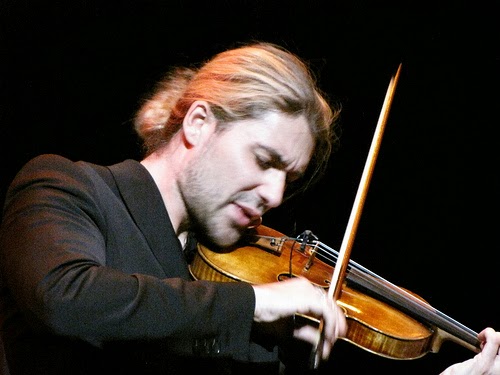
About four years ago, I was flipping through the TV channels when I came across a handsome, solo violinist in concert.  He was dressed in faded blue jeans, a T-shirt, and a blue jacket.  He had a bit of stubble, and his blond hair was tied back in a short ponytail.

Not only did his casual appearance stop me in my tracks, his music also had my undivided attention.  It wasn't entirely classical, and he was backed by his band and an orchestra.  As I continued to listen, I realized that David Garrett was a crossover classical artist, and what I was listening to had to be a fusion of classical elements with rock or pop.  Garrett was performing a track from one of his albums, David Garrett, and the music was an amazing blend of two popular and well respected genres.

If that weren't enough, I was even more transfixed by Garrett's outstanding command of his instrument and his physical ability to play at stunning speed. The speed and precision in which he played some of his pieces were phenomenal.  (He is in the Guinness World Records for playing "Flight of the Bumblebee" in 66 seconds.  Now that's lightning speed!)

I was so in awe of Garrett's incredible talents that the next day I ran, not walked, to the nearest music store and bought the CD.  I became a big fan after listening to it several times.

The Crossover Music

On his CD, David Garrett, the crossover violinist did his own arrangements and integrated classical elements into songs by popular recording artists and rock bands.  For example, Garrett fused Mozart's "Turkish March" with a Michael Jackson song.  And on another piece, Garrett fused Paganini's "Caprice No. 24" with a Metallica song.

Garrett also did his own interpretations of the theme song from the movie "Pirates of the Caribbean," and from Vivaldi's "Summer" and Bach's "Air."  In addition, he included a track of his own composition.

Who is This Virtuoso Extraordinaire?
So, who is this guy and how long has he been around?  The short answer is he's a world-class, accomplished violinist who has been around for a long time.  

David Garrett is from Germany and has been playing the violin since age four. During his childhood, he studies under world-renowned violinist Yehudi Menuhin. At age ten, he makes his first appearance with the Hamburg Philharmonic.  At age thirteen, he is the first youngest soloist to sign a contract with Deutsche Grammophon Gesellschaft, a German classical record label.  

Garrett's rapid rise to fame and popularity in such a short period of time is truly remarkable, and his repertoire is equally as impressive.  He becomes a superstar in Germany and throughout Europe.

In 1999, Garrett leaves Germany and moves to New York to study with legendary violinist Itzhak Perlman at the Juilliard School.  He wants to perfect his technique and study composition.  It is also at this time when he is in contact with people his age, and he becomes aware of the types of music that appeal to them.  One of the popular genres is rock music that would later become a major influence in his work.

After Juilliard, Garrett returns to Germany and decides to branch out and reach a younger audience.  It's important to him that they experience classical music, so he brings classical music to them in a new relatable form: crossover.

"You've got to give people a little bit of something that they know, something that they feel comfortable with, and then they are going to feel comfortable with classical pieces like Bach, Brahms, etc.," Garrett said.

"Rock Symphonies"

In 2010 Rock Symphonies comes out and again I run, not walk, to the music store to buy the crossover CD.

Garrett works on this album for two years before recording it.  He calls it his "most extraordinary and ambitious project."  On the album he devotes the majority of the tracks to rock anthems by Nirvana, Aerosmith, U2, Metallica, and more.  And he includes his incredible interpretations of Beethoven's "The Fifth" and Bach's "Toccata."  But the most exceptional piece is "Vivaldi vs. Vertigo," in which Garrett does a mashup of U2's "Vertigo" with Vivaldi's "Winter" Concerto from The Four Seasons.

The crossover music on Rock Symphonies is of the highest quality.  The interpretations of the classical pieces and the fusion of classical elements with rock or pop are skillfully and tastefully done.  Furthermore, the crossover is surprisingly compatible, and the beautiful sound of the violin adds a wonderful dimension.

The album becomes a huge hit in Europe and Asia.  In America, Garrett is named the best-selling new classical artist.

An Innovative Classical Violinist, A Traditional Classical Violinist at Heart

David Garrett is a courageous individual who ventures out of his classical world and finds his voice in crossover.  He creates a unique blend of classical and rock that can be enjoyed by different types of people.  Garrett provides a bridge that connects people and music together in a new refreshing way.

Even though Garrett has changed direction, he says "my home is still in classical music."


Image Credits: Mari Smith via photopin cc
Mari Smith via photopin cc

Works Cited:  

www.david-garrett.com/us/about/
      Retrieved 4 Jan. 2014. 

"David Garrett Interview."  Time Out Chicago  10 Apr. 2009.
     www.timeout.com.hk/music/features/22486/david-garrett-interview.html
     Retrieved 4 Jan. 2014.

Wu, Dorothy.  "DAVID GARRETT - Evolution of an Icon, Metamorphosis of an
     Artist."  Notes on The Road  6 Nov. 2012.  
     www.notesontheroad.com/david-garrett.html
     Retrieved 10 Jan. 2014.


[...]

Continue


Hi everyone, 

Happy Holidays!  May this holiday season be filled with the love and warmth of your family and friends; the spirit of giving and receiving; great food; and the appreciation for all that you have in life.

I hope the New Year brings you good health, prosperity, and the desires of your heart.


Bev


Image credit: gem66 via photopin cc
[...]

Continue